
Embark on your baking journey with our guide to baking tips for beginners, filled with essential advice to help you master the art of baking from the get-go. Get ready to whip up some delicious treats and impress your friends and family with your newfound skills!
Whether you’re a total newbie in the kitchen or looking to level up your baking game, these tips will set you on the right path to becoming a baking pro in no time.
Baking Tips for Beginners
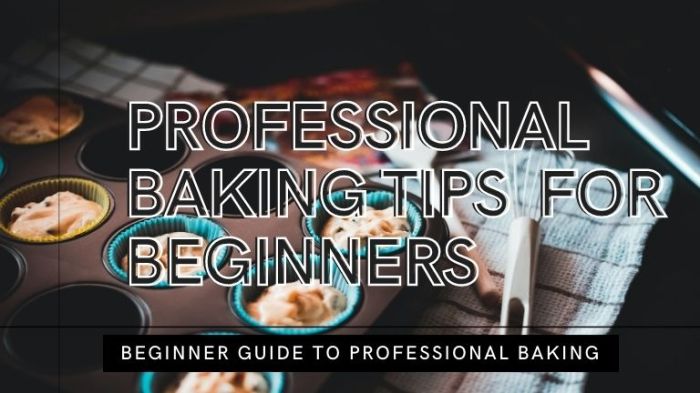
When starting out in baking, there are some key tips that can help you on your journey to becoming a pro in the kitchen. Let’s explore some essential tips for beginners!
Importance of Accurate Measurements
One of the most crucial aspects of successful baking is accurate measurements. Baking is a science, and even small deviations in measurements can lead to significant changes in the final product. Make sure to use measuring cups and spoons for dry ingredients and a kitchen scale for precise measurements of wet ingredients.
Common Baking Ingredients for Beginners
- All-purpose flour
- Granulated sugar
- Baking powder
- Baking soda
- Butter
- Eggs
- Salt
Having these basic baking ingredients in your pantry will set you up for success in a wide range of baking recipes. As you gain more experience, you can expand your collection with additional ingredients.
Significance of Preheating the Oven
Preheating the oven before baking is essential for ensuring that your baked goods cook evenly and thoroughly. Most recipes will specify the temperature at which to preheat the oven, so make sure to follow these instructions carefully. Preheating also helps activate leavening agents like baking powder and baking soda, leading to better rise and texture in your baked treats.
Essential Baking Equipment
When starting out as a beginner in the world of baking, having the right tools is essential to ensure successful results. Here are some basic baking tools you will need:
Baking Pans
- Cake pans: Used for baking cakes of various sizes.
- Muffin tin: Essential for making cupcakes and muffins.
- Baking sheets: Ideal for cookies, pastries, and more.
Mixing Bowls and Utensils
- Mixing bowls: Different sizes for mixing ingredients.
- Whisk: For incorporating air into batters and mixtures.
- Spatula: Helps in folding ingredients gently.
Measuring Tools
- Measuring cups and spoons: For precise measurement of ingredients.
- Kitchen scale: Useful for accurate measurements, especially for baking by weight.
Oven Thermometer
- Ensures your oven is at the correct temperature for baking.
- Helps prevent under or over baking your treats.
Properly Greasing Baking Pans
To ensure your baked goods come out easily from the pans, it is important to properly grease them. Use a pastry brush or paper towel to evenly coat the pan with butter, oil, or non-stick cooking spray. You can also dust the greased pan with flour to prevent sticking.
Difference between Parchment Paper and Wax Paper
Parchment paper and wax paper are both useful in baking, but they serve different purposes:
- Parchment paper: Heat-resistant and non-stick, ideal for lining baking pans and preventing sticking. It can withstand high temperatures without burning.
- Wax paper: Not heat-resistant and should not be used in the oven. It is suitable for wrapping food or lining surfaces for no-bake recipes.
Understanding Baking Techniques
In the world of baking, mastering different techniques is crucial for achieving the perfect baked goods. Let’s dive into some essential baking techniques that every beginner should know.Creaming Method:The creaming method is a fundamental technique in baking that involves beating sugar and fat (usually butter) together until light and fluffy. This process incorporates air into the mixture, creating a light and tender texture in baked goods.
The importance of the creaming method lies in creating aeration, which helps the batter rise during baking, resulting in a soft and delicate crumb.
Properly Kneading Dough
Kneading dough is essential for developing gluten and achieving the desired texture in baked goods. Here are some tips on how to properly knead dough for different types of baked goods:
- For bread: Knead the dough by folding it over onto itself, pushing with the heel of your hand, and rotating the dough. This helps develop gluten for a chewy texture.
- For pastry: Handle the dough gently and avoid over-kneading to prevent toughness. Use a light touch to maintain a tender and flaky texture.
- For cookies: Mix the dough until just combined to avoid overworking the gluten, resulting in tender and crumbly cookies.
Role of Leavening Agents
Leavening agents play a crucial role in baking by creating air bubbles in the batter or dough, leading to rising and lightening the texture of baked goods. Here’s how different leavening agents work:
- Baking powder: A combination of baking soda, cream of tartar, and a dry acid. When mixed with liquid and exposed to heat, it produces carbon dioxide gas, causing the batter to rise.
- Baking soda: Requires an acidic ingredient (such as buttermilk or yogurt) to activate and produce carbon dioxide gas, resulting in leavening.
- Yeast: A living organism that ferments sugars in the dough, releasing carbon dioxide gas and alcohol, leading to the rise of bread and other yeast-leavened baked goods.
Troubleshooting Common Baking Mistakes
When it comes to baking, even the most experienced bakers can run into common mistakes that can affect the outcome of their baked goods. For beginners, these mistakes can be even more frustrating. However, with a little knowledge and preparation, many of these issues can be easily avoided or fixed.
Sunken Cakes
One common issue that beginners face is cakes that sink in the middle after being baked. This can happen due to a few reasons such as underbaking, opening the oven door too early, or using old leavening agents like baking powder. To avoid sunken cakes, make sure to follow the recipe instructions carefully, do not open the oven door until the cake is almost done, and always check the expiration date of your leavening agents.
Burnt Cookies
Burnt cookies can be a result of baking them at too high a temperature or leaving them in the oven for too long. To avoid burnt cookies, make sure to preheat your oven properly, set a timer to check on your cookies periodically, and adjust the baking time according to your oven’s temperature accuracy.
Tough Bread
If your bread turns out tough and chewy instead of light and fluffy, it could be due to over-kneading the dough or not allowing it to rise properly. To avoid tough bread, knead the dough just until it comes together and rises in a warm, draft-free place. Additionally, make sure to follow the proofing times mentioned in the recipe.
Cooking and Culinary
When it comes to the world of food preparation, baking and cooking are two distinct techniques that require different skills and approaches. While both involve the use of heat to transform ingredients, there are key differences between the two.Baking is a method of food preparation that involves using dry heat in an enclosed space, such as an oven, to cook food.
It typically involves the use of precise measurements and specific ingredients like flour, sugar, and leavening agents to create baked goods like bread, cakes, and pastries. Baking is a science that requires careful attention to detail and following recipes closely to achieve the desired results.On the other hand, cooking, also known as culinary arts, involves a broader range of techniques that include sautéing, boiling, grilling, and frying.
Unlike baking, cooking is more flexible and allows for more improvisation and creativity in the kitchen. It often involves using fresh ingredients and experimenting with different flavors and seasonings to create savory dishes like soups, stews, and stir-fries.
Differences Between Baking and Cooking
- Baking requires precise measurements and following recipes closely, while cooking allows for more experimentation and creativity.
- Baking uses dry heat in an enclosed space like an oven, while cooking involves a variety of cooking methods like sautéing, boiling, and grilling.
- Baking is more structured and follows specific techniques to achieve consistent results, while cooking is more flexible and allows for adjustments and personal preferences.
Enhancing Culinary Skills through Baking
- Understanding baking techniques can enhance overall culinary skills by improving precision, attention to detail, and knowledge of ingredient interactions.
- Baking teaches patience and discipline, which are valuable traits in the kitchen for both baking and cooking tasks.
- Knowledge of baking can help in creating a wider range of desserts and baked goods to complement savory dishes in culinary creations.
Summary
With these baking tips at your fingertips, you’re well-equipped to tackle any baking challenge that comes your way. Remember, practice makes perfect, so don’t be afraid to experiment and have fun in the kitchen. Happy baking!
Question & Answer Hub
What is the importance of accurate measurements in baking?
Accurate measurements ensure that your baked goods turn out just right, as baking is a science that requires precision.
What are common baking ingredients every beginner should have in their pantry?
Flour, sugar, eggs, butter, baking powder, and vanilla extract are essential ingredients to have on hand for most baking recipes.
What is the difference between parchment paper and wax paper in baking?
Parchment paper is heat-resistant and non-stick, while wax paper is not heat-resistant and should not be used in the oven.
How can I avoid common baking mistakes like sunken cakes or burnt cookies?
Follow recipes closely, use an oven thermometer for accurate temperature, and avoid overmixing the batter to prevent these issues.
What is the role of leavening agents in baking?
Leavening agents like baking powder and baking soda help baked goods rise and become light and airy.


